A memorable New York City day rarely comes from fitting the longest possible list into an itinerary. It comes from having a clear purpose, enough time to notice the city, and a route that does not force everyone to crisscross Manhattan. For many visitors, a skyline experience in Midtown provides an easy anchor for the day.
If the Empire State Building is your central stop, review Empire State Building events before finalizing the schedule. A planned visit can shape the rest of the day around nearby streets, meals, indoor spaces, and an easier route back to your hotel or evening plans.
Why a Smaller Plan Makes a Better City Day
New York rewards curiosity, but it also demands realistic pacing. A route that looks short on a map can involve crowded sidewalks, long blocks, station stairs, lines, security checks, and frequent pauses for photos. Trying to pair a Midtown observation deck with distant stops in Lower Manhattan, Central Park, and Brooklyn in one day can turn sightseeing into transit management.
A smaller plan gives each stop more value. Instead of racing from landmark to landmark, visitors can enjoy Art Deco details around Fifth Avenue, browse shop windows, stop for coffee, sit in a public space, and notice how the neighborhood changes from morning commuters to evening theater crowds. One strong theme also makes decisions easier: skyline views, architecture, museums, food, parks, or family-friendly activities.
Step 1: Choose One Main Sightseeing Goal
Start with one question: what do you want to remember most from this day? A wide city view may be the priority for first-time visitors. Others may care more about a relaxed neighborhood walk, indoor culture, food, shopping, or photography. Pick one major timed activity, then add only two or three nearby experiences that support it.
For a Midtown-centered day, the main activity could be a visit to an observation deck. Nearby additions might include a short walk along Fifth Avenue, Bryant Park, the New York Public Library area, Herald Square, Koreatown, or dinner near your next subway line. This structure creates a useful filter: if an activity adds a long detour without improving the day, save it for another visit.
Step 2: Build the Route by Neighborhood
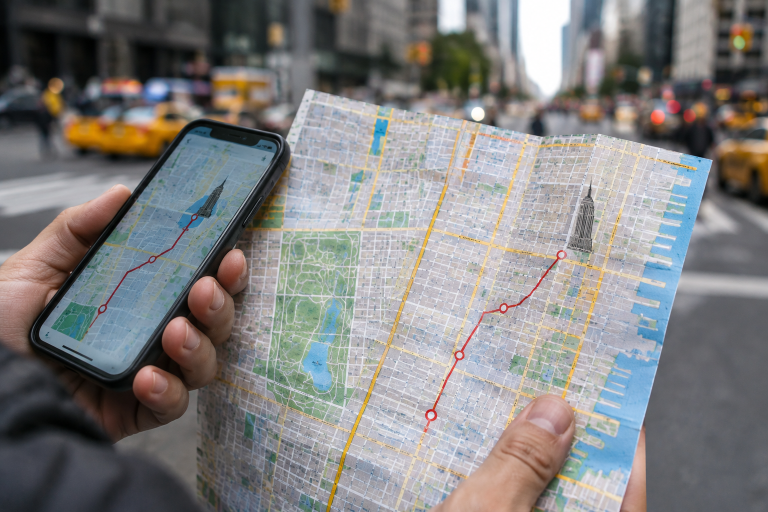
Put the major attraction on a map first, then build outward in a compact circle or one-direction route. Add a breakfast or coffee stop, a public space for a short walk, a lunch option, an indoor backup, and a simple path toward the evening destination. Walking should be part of the experience, not an afterthought between appointments.
In Midtown, a practical route may begin near Penn Station or Grand Central, move toward the Empire State Building, continue through nearby streets at an unhurried pace, and end near dinner or a subway station. Avoid scheduling multiple timed entries far apart. A day becomes easier when the final stop does not require a stressful cross-city transfer.
Step 3: Choose the Best Time for Views and Photos
Time of day changes the feeling of the city. Morning can offer a calmer pace and softer light. Afternoon brings busier streets and a natural reason to stop at cafés or museums for a break. Late afternoon can lead smoothly into dinner, while evening brings lit windows, traffic, and a more dramatic skyline.
Arrive before the light you want, rather than exactly at sunset or after dark. That leaves room for entry procedures, orientation, and a few photos before conditions change. Clouds, haze, rain, temperature, and wind can all affect an outdoor viewpoint, so check the forecast the night before and again before leaving your hotel. If visibility is disappointing, shift the focus to architecture, food, or indoor exhibits rather than treating the day as a loss.
Step 4: Plan Transit Without Losing the Day
Walk for nearby connections and use the subway for longer jumps. Keep one alternate route in mind if a station is crowded, an elevator is unavailable, or service changes affect the line you planned to use. Before leaving, check real-time transit alerts so a timed ticket or dinner reservation is not dependent on outdated directions.
Give yourself extra time during weekday commuting periods, weekend service changes, and late-night travel. If someone in your group has mobility needs, confirm the route and station access before setting out. A slightly longer but simpler trip is often better than a theoretically faster route with several transfers.
Step 5: Check Events, Closures, and Crowd Conditions
Parades, festivals, construction, demonstrations, sporting events, and street fairs can reshape a normal city route. They may affect pedestrian access, taxi service, bus stops, entrance lines, and the time required to cross an avenue. Review the weekly traffic advisory if your plans rely on cars, buses, or a particular cross-town connection.
When a major event is nearby, move the most important activity earlier in the day. Keep the afternoon flexible, particularly if you are traveling with children, older relatives, or anyone who will benefit from less standing and fewer route changes.
Step 6: Add Meals and Rest Before Everyone Needs Them
Schedule food and seated breaks before energy drops. A brief pause every 60 to 90 minutes can make a long walking day more comfortable, especially in summer heat, winter wind, or wet weather. Choose meal stops near the next activity rather than traveling across town just for a restaurant.
Families may need snack breaks and space to sit. Older travelers and visitors with mobility concerns may prefer fewer stairs, shorter walking segments, and simpler station choices. Carry water, portable snacks, a phone charger, comfortable footwear, and a light layer for changing indoor and outdoor temperatures.
Step 7: Use a Simple Photo Plan
You do not need hundreds of rushed images to remember New York. Try a four-shot plan: capture one wide view, one architectural detail, one image with a person or vehicle for scale, and one later photo after the light changes. Reflections, street markings, railings, trees, and building lines can add depth without requiring special equipment.
Keep phones and cameras secure in busy areas, and pause at the edge of pedestrian flow before framing a shot. The best pictures often come when the group has enough time to wait for a clear moment rather than being rushed to the next reservation.
Sample One-Day Planning Framework
Morning: Start With the Main View
Handle the day’s most important scenic or cultural stop first. Follow it with breakfast or coffee nearby, then take a short walk through the surrounding blocks.
Midday: Eat and Go Indoors
Use the busiest or least comfortable part of the day for lunch and a flexible indoor activity, such as a library, museum, market, gallery, or café.
Afternoon and Evening: Keep the Finish Easy
Choose two or three nearby stops, leave room for small discoveries, and finish near dinner, your hotel, or a direct transit connection.
Common Planning Mistakes to Avoid
- Booking several timed attractions in distant neighborhoods.
- Ignoring the walk from a subway platform to the actual entrance.
- Leaving no time for meals, restrooms, security, or lines.
- Assuming every member of the group moves at the same pace.
- Making the entire day depend on clear weather.
Conclusion
A better New York City sightseeing day is not about seeing everything. It is about choosing one meaningful view or activity, connecting nearby experiences, and protecting enough time for food, rest, and unexpected discoveries. With a focused Midtown route and a flexible backup plan, the city can feel exciting without feeling rushed.